Say “First Draft” When the Tool Produces a First Draft
The tool-page promise was narrowed to match the output a real test could support.
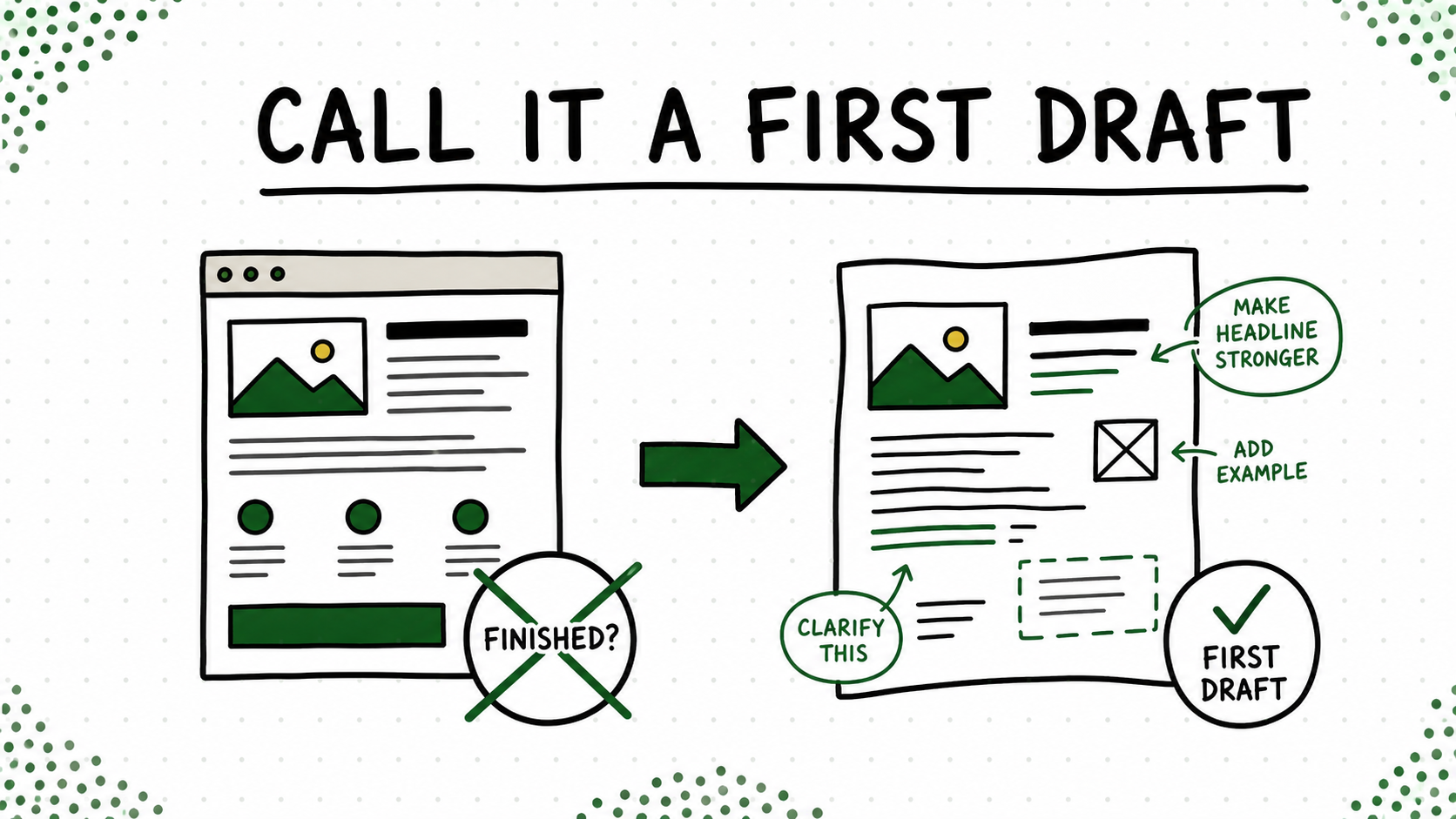
“Write the article for me” is a wonderful promise. I would also like a button that finishes the article, checks every fact, adds my lived experience, understands the reader, makes the joke land, and remembers the weird thing I said in an email three years ago.
That is not what most writing tools produce. “Help me get to a first draft” sounds smaller, but it is much closer to the useful job the product can actually do.
When I ran a real input through the Visible Light tool, the output gave me a useful starting point. The blank page was gone. The structure was there. It still needed facts checked, examples added, awkward phrasing removed, and a human editor who knew the audience well enough to notice what was missing.
So the promise got smaller
Calling the output a first draft did not weaken the product. It named the handoff. The tool gets you from nothing to something you can work with; your judgment turns that something into an article worth publishing.
That framing also makes the product easier to teach. Instead of pretending the button replaces the whole process, we can show the user how to review the result, add proof, make it sound like them, and decide when it is ready.
Try this on your blog
- Run the product with an ordinary customer input.
- Circle every part a person still has to review or finish.
- Describe the output at that exact level of completion.
You’re done when: The page promise matches the output a normal user receives without pretending the remaining work disappeared.
Trust usually dies in the inch between what the button promised and what showed up. I would rather make an accurate promise and pleasantly surprise someone than sell them a magic trick and hand them homework.