I Ran the Tool Before I Wrote About It
A live tool test exposed inaccurate assumptions before they became confident marketing copy.
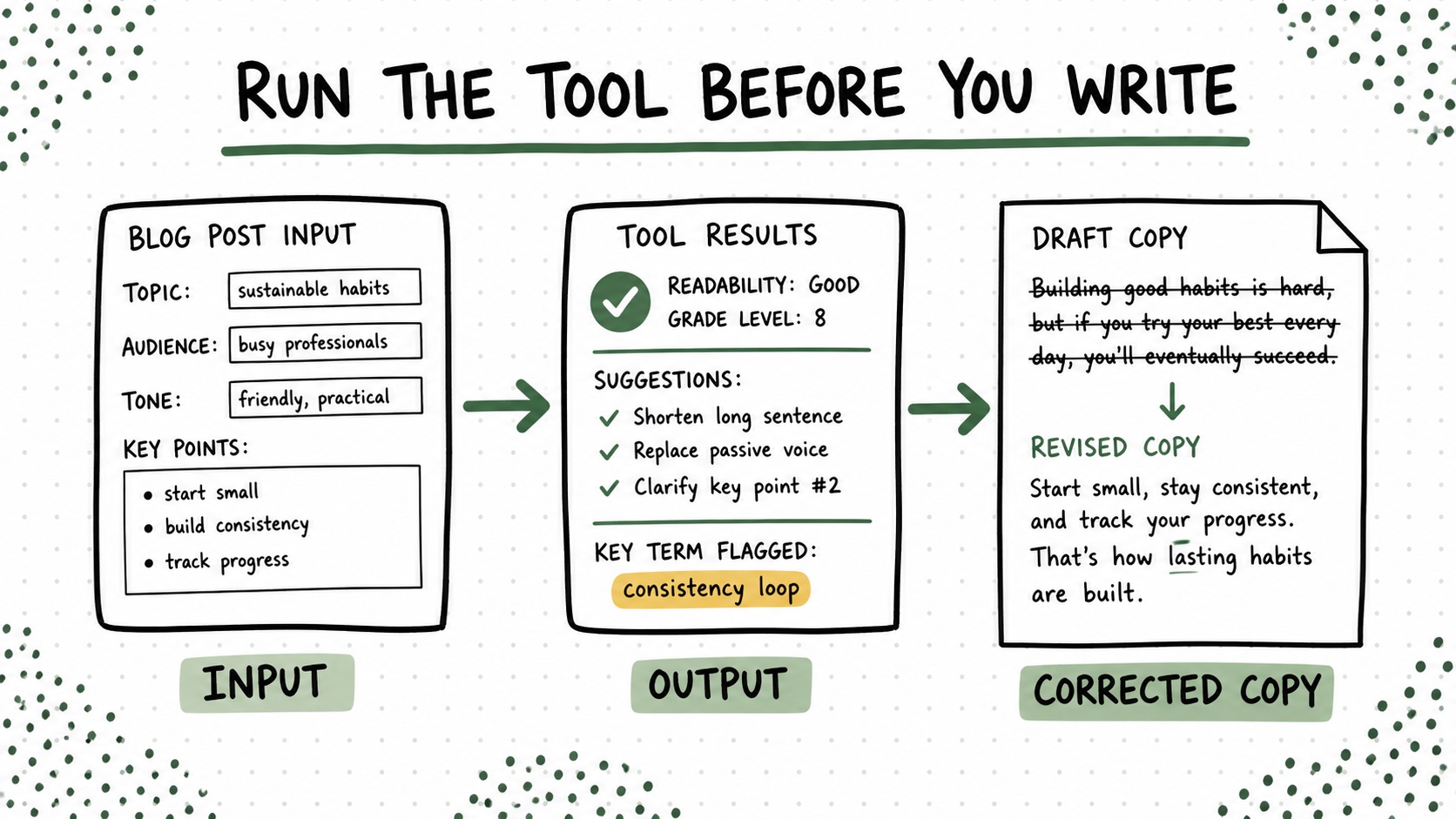
I was reviewing copy for a Visible Light tool page, and the draft sounded great. It confidently explained what the tool would produce, who it would help, and why the result would be useful. There was only one small administrative detail left: actually running the tool.
The real output was different enough that the explanation had to change. Not because the tool was useless. It was because we had written about the ideal version in our heads instead of the version a customer could use that afternoon.
So I made myself a rule
Before I write about any calculator, generator, quiz, software feature, or AI tool, I now use one realistic input and save the full output. I try to choose the kind of input a real person would type—not a pristine demo prompt written by someone who already knows how the product works.
That one test gives me the example, the screenshot, the limitation, and the language a beginner will actually need. It also ruins a surprising number of beautiful marketing sentences, which is inconvenient but generally preferable to letting the customer do it later.
Try this on your blog
- Use the tool with the same input your customer would try.
- Save the full result—not only the flattering part.
- Rewrite every promise the result cannot consistently support.
You’re done when: You have saved one real output and corrected every promise that the output cannot support.
I am not trying to make the promise timid. I am trying to make it true and useful. A five-minute test is cheaper than publishing a polished explanation of a product that exists only in the copywriter’s imagination.