The Five-Layer Moat Under Every Free Tool
Five live tool pages exposed the difference between shipping a widget and building an editorial asset worth finding and trusting.
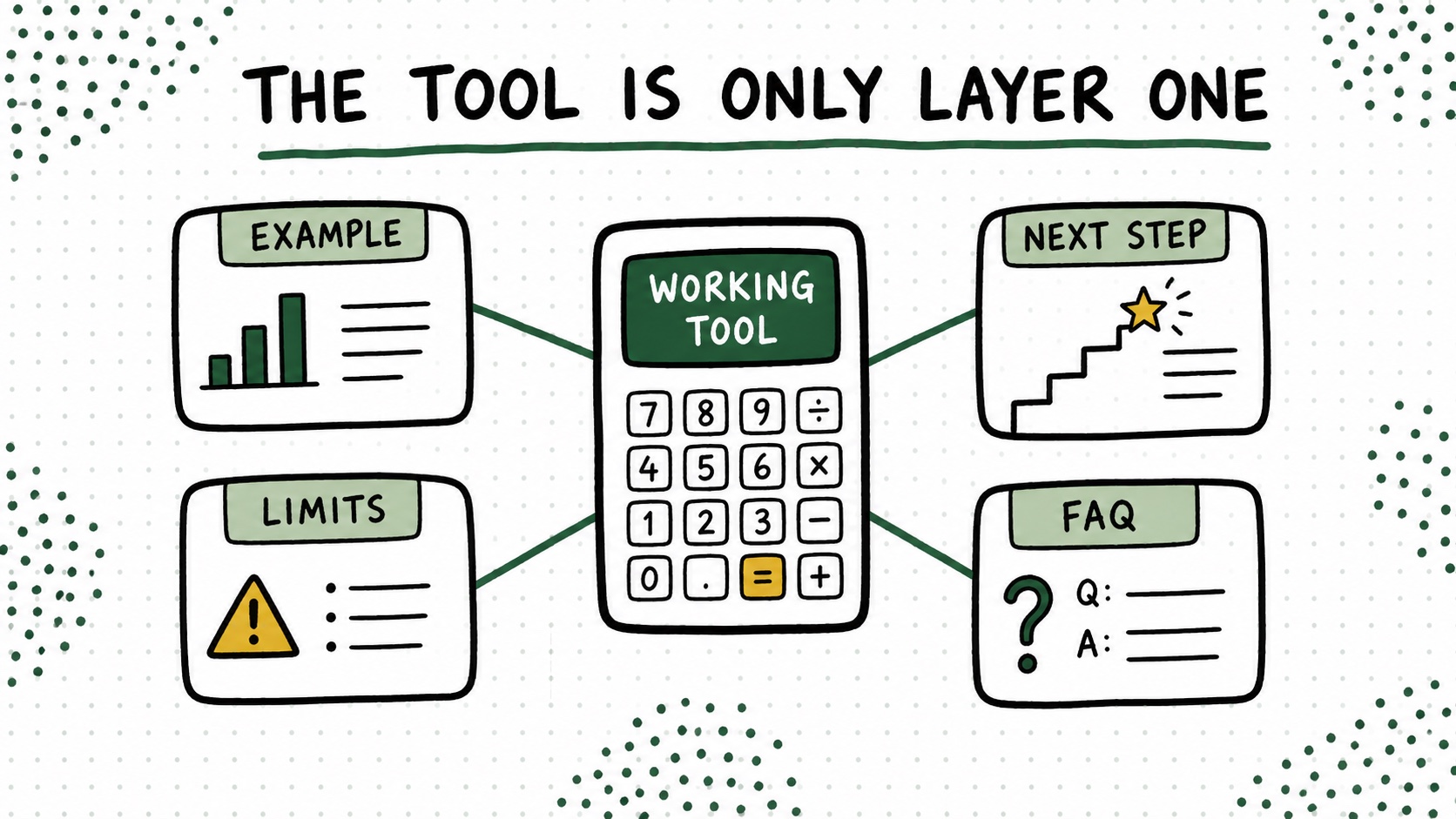
When I audited five Visible Light tool pages, the widgets worked. You could enter something, press the button, and get the result. It was tempting to call the pages finished because the most technical part had done its job.
Then I tried to use the pages like a first-time visitor. A person still needed to see an example, understand the controls and limitations, know what to do with the answer, and get help that did not read like generic filler added because an SEO checklist demanded an FAQ.
Then I looked past the working widget
The real moat was the stack around the tool: a working result, a concrete example, honest limitations, one internal next step, and a human-edited FAQ. The widget answered the immediate question. The page had to help the person trust the answer and continue.
This is important because a free tool can attract a visit without building a business. If the result appears in a little island with no explanation or next decision, the user gets their answer and disappears. Useful for them, perhaps. Not exactly a moat for the site.
Try this on your blog
- Run your tool with one realistic input and screenshot the result.
- Explain one limitation before the user discovers it.
- Link the output to the single guide or product that helps with the next decision.
You’re done when: A first-time user can run the tool, understand the result, see its limit, and choose one next step.
A free tool is not finished when the code runs. It is finished when the user knows what the answer means.