
For years, one of the blogs behind Create & Go depended on Pinterest for nearly all its traffic.
This was not a secret. It was the plan.
Pins worked, people came, and we built the business around the part that worked. Then the traffic slowed.
Nobody from Pinterest called to discuss the transition.
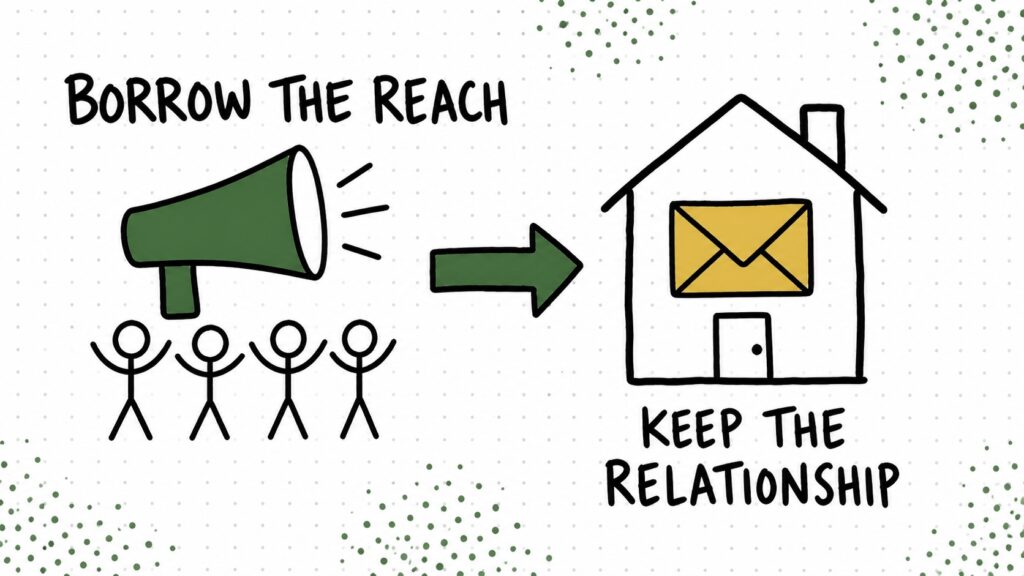
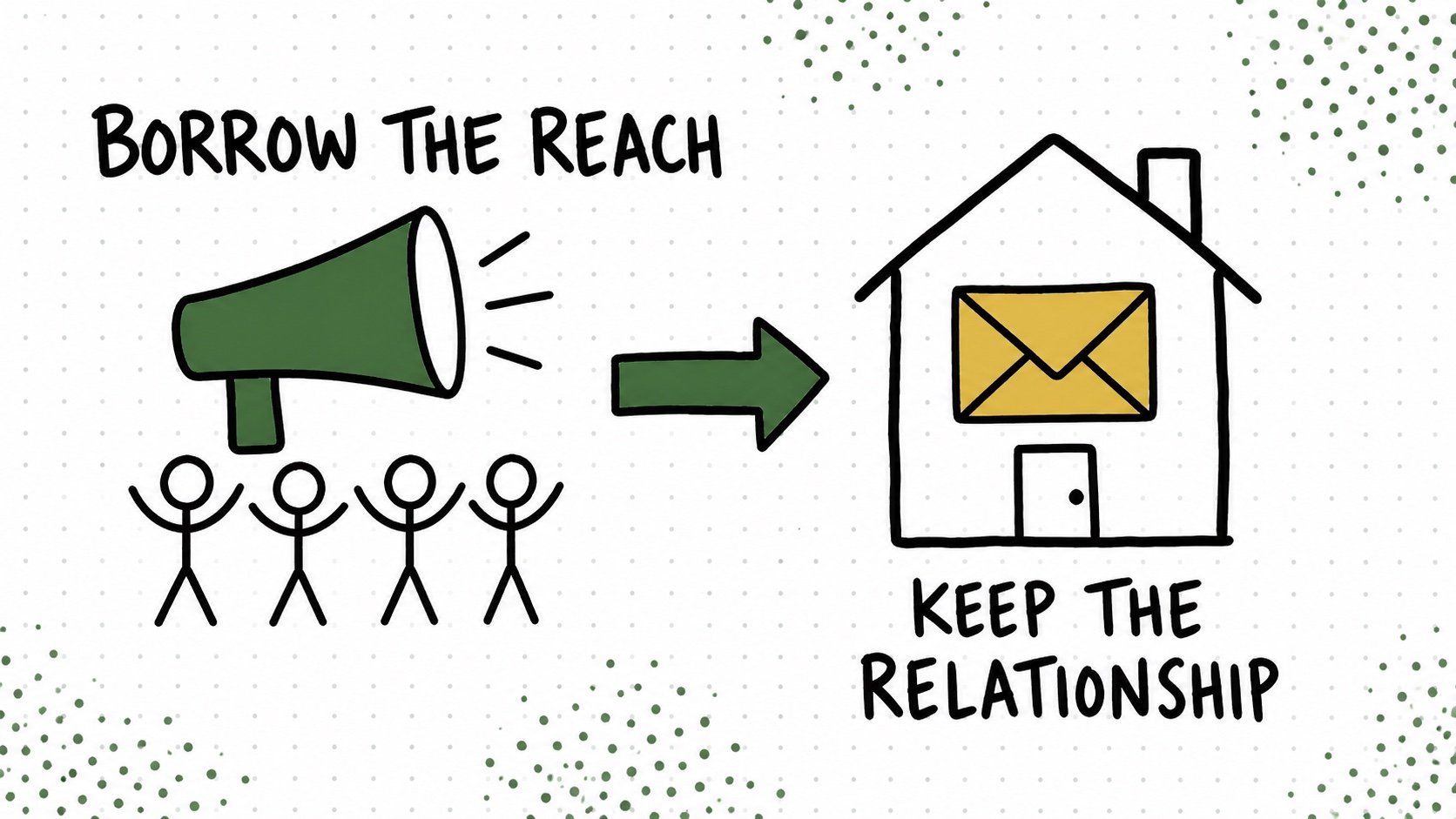
That experience changed how we hear the phrase own your audience. It does not mean owning people. It means giving the relationship somewhere portable to live: useful work on your domain and permission to email the readers who want more.
That is the uncomfortable part of building your entire audience in somebody else’s feed. You can do good work there for years and still wake up one morning with less access to the people who chose to follow you. The platform did not break a promise. It simply never made the promise we were quietly relying on.
If one service becomes expensive, unreliable, or strangely hostile to links this month, you can move the underlying assets instead of starting over with an empty room.
Social media still matters. It is often where a stranger first encounters your work, and it remains unusually good at making a useful idea travel beyond the people who already know your name.
The blog gives that idea room to become more than a caption. It can hold the full explanation, the evidence, the awkward caveat, and the useful next step without requiring you to point at part two in the comments.
Email comes later. A reader has decided the relationship is worth continuing and has given you permission to show up again. That is a meaningfully different agreement from a follow.
These channels work best as stages in one reader relationship, not as three boxes to check in a marketing plan.
The quick answer
You are building an owned audience when:
- Your useful content lives on a domain you control.
- Readers voluntarily give you permission to contact them.
- You can export your subscriber data and move to another provider.
- Discovery channels point people toward that owned system.
- Your business can still reach its people if one channel gets weird.
That final condition matters because “owned” does not mean invincible. Your website still needs a host, which means outages remain possible. Your subscriber file can move, but the provider sending from it can raise prices or hurt deliverability. And even a post on your own domain may lose visitors when Google puts a 400-word AI summary between the searcher and the article you spent three days writing.
Ownership means portability and reduced dependence, not a magic force field around your revenue. You are trying to avoid one company becoming a single point of failure—not to remove every outside company from your business.
The useful distinction: You will probably rent distribution for as long as you run an online business. What you can own are the assets and permission that make the relationship portable.
You do not own the room just because people know your name
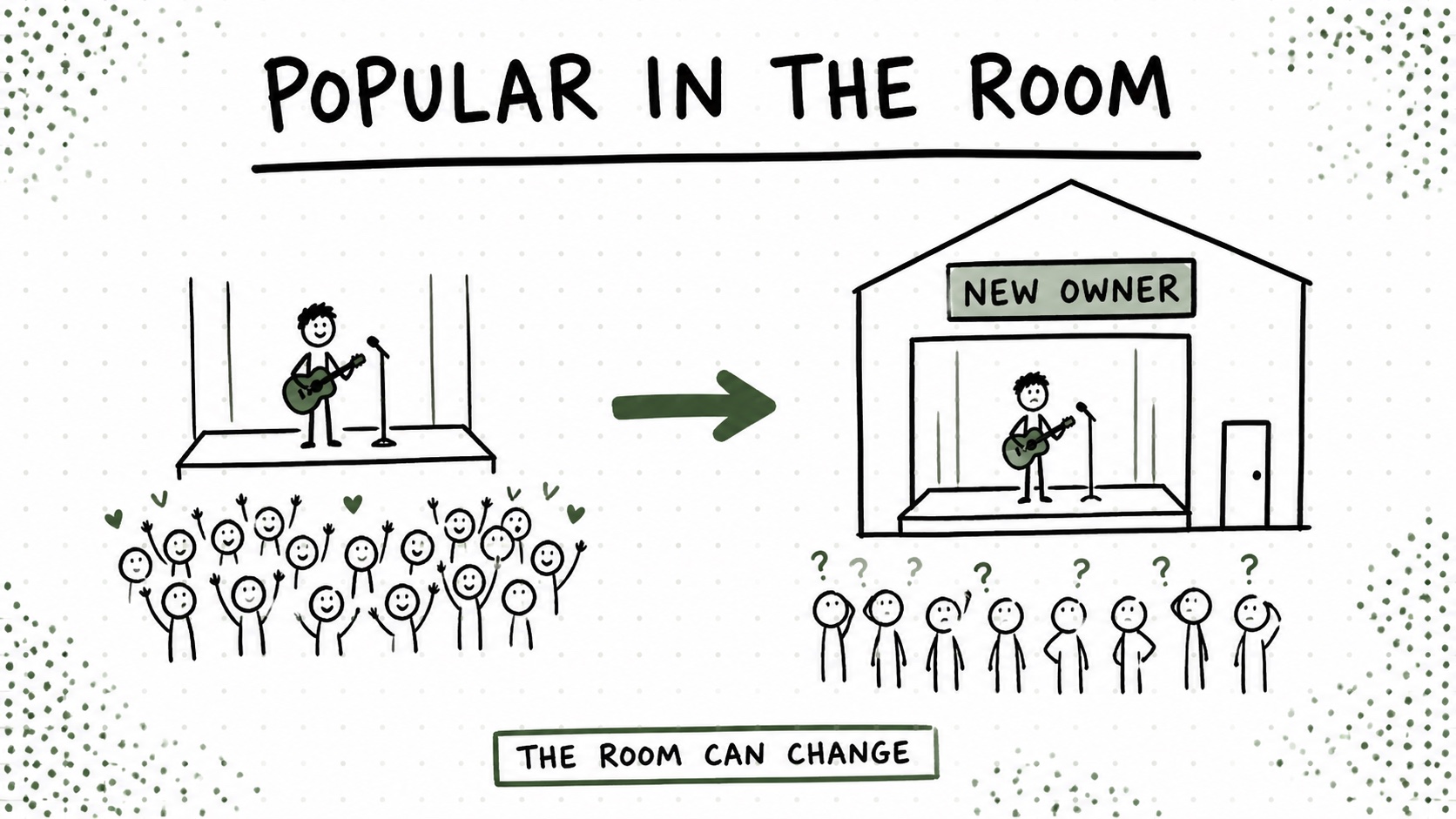
Imagine you become the most popular musician at a neighborhood bar.
Every Friday, the room fills with people who know the songs well enough to request the wrong ones. The bartender starts your tab before you sit down, and strangers now feel qualified to provide detailed feedback about the set list. You have reached the dangerous level of local fame.
Then the owner sells the building.
The new owner turns it into a dentist’s office.
Your audience still exists, theoretically. But you never learned their names, collected their contact information, or gave them another place to find you. You were popular in the room. You did not own the relationship.
That is what a social following can become.
Instagram, TikTok, YouTube, Pinterest, LinkedIn, and whatever opens for business next Tuesday can be excellent discovery channels. We have built businesses with the help of those channels. One of the blogs behind Create & Go drove nearly all its traffic through Pinterest.
The risk was obvious: almost all the new attention arrived through one company.
So we used that traffic to grow an email list with tens of thousands of subscribers. When traffic slowed, we still had a way to communicate with people who had asked to hear from us.
The list did not make us invincible, but it gave the business another door. When Pinterest traffic slowed, we did not have to wait quietly for the graph to recover before we could talk to readers again.
Our guide on how to build an email list covers the tactics. The deeper lesson is simpler:
Discovery gets the introduction. Ownership lets the conversation continue.
What you own—and what you are still borrowing
People use “own your audience” a little too casually. You do not own a subscriber’s attention forever because they downloaded your checklist during a burst of Sunday-night ambition.
What you can own is the infrastructure around the relationship, and even that ownership has limits.
| Most portable Your email list | Your domain | Your website | A social following | Search traffic | |
|---|---|---|---|---|---|
| What you control | An exportable record of people who gave permission | The address and where it points | The content, structure, offers, and publishing schedule | The work you publish and how you engage | The usefulness and quality of your pages |
| What remains outside your control | Deliverability systems and your email provider | The registrar’s service and rules | Your host, software, and technical dependencies | Distribution, features, reach, and account access | Rankings, result layouts, and algorithm changes |
Ownership reduces dependence; it does not remove every outside service.
Unless you plan to hand-deliver printed newsletters by bicycle, you will use tools owned by other companies.
The better questions are:
- Can you move your website to another host?
- Can you export your subscribers and import them somewhere else?
- Can a reader type your domain into a browser and find you directly?
- Can the business survive if one traffic source stops working as well as it used to?
Those questions tell you more than a follower count ever will.
A blog and an email list do different jobs
A lot of people frame this as a choice:
Should I start a blog or a newsletter?
That is a bit like asking whether a bakery needs a kitchen or a front door.
You can technically choose one. The business gets much more useful when they work together.
Your blog gives your ideas a permanent address
A good blog post can answer a question today and still help a reader years from now. It can appear in search, get linked from another site, support a sales page, explain your point of view, or give a potential customer proof that you know what you are doing.
More importantly, it lives under your name on your domain. Six months from now, you can revise the weak section, add a better example, or point the reader toward a new product that did not exist when you first published. A social post can travel quickly; a good blog post can keep doing useful work after the feed has forgotten it.
If you do not have that home yet, our step-by-step guide to starting a blog walks through the setup.
Your email list brings people back
A blog is an excellent home, but even enthusiastic readers are unlikely to type your URL every Thursday just to see whether you published. Email creates the return path. Someone can find one useful article, subscribe because the next lesson sounds relevant, and hear from you again without adding “remember that nice gardening blog” to a calendar.
The newsletter can also carry ideas that do not deserve a 2,000-word article: a correction, a short story from the work, a question you are still thinking through, or a link to somebody else’s excellent explanation. It keeps the relationship alive between larger pieces of work.
Social media introduces you to new people
Social platforms are useful because people already gather there. They are fast places to join a conversation and notice which questions keep coming up. A short post can also test whether an idea is legible before you spend a week turning it into the definitive guide.
The mistake is asking a discovery channel to become your entire business. A conference may be the perfect place to meet customers, but you would not rent a folding table in the lobby and call it company headquarters.
Use social media like a good conference: meet people, be useful, and give the right ones a way to continue the conversation somewhere quieter.
You do not need to storm out of the conference yelling about rented land.
You just need to leave with a few phone numbers.
Jay Clouse’s Parts framework separates the work of attracting attention, building trust, and earning revenue instead of pretending “make more content” is a strategy. Read it while asking which part of your own business has been expected to do three jobs at once.
Followers and subscribers are not the same relationship
A follow is usually a small decision.
Someone likes a post, taps a button, and keeps scrolling. You now live somewhere between a former coworker and a video of a raccoon washing grapes.
An email signup asks for more intention. The reader gives you access to a place they use for work, bills, conversations, and approximately 14 receipts they swear they will organize later.
That does not make every subscriber more valuable than every follower. A bored subscriber who never opens anything is not a business asset. A highly engaged YouTube community can be tremendously valuable.
The difference is the agreement.
| Direct permission Email subscriber | Social follower | Search visitor | Customer | |
|---|---|---|---|---|
| What the reader did | Gave direct permission to contact them | Tapped follow inside a feed | Chose one result for one question | Paid for help with a result |
| What access you have | Direct, portable, and repeatable | Filtered by the platform | Usually one visit unless you earn another | Direct relationship plus purchase history |
| Best job | Trust, return visits, and relevant offers | Discovery and conversation | Solve a specific problem | Deliver, support, and learn |
The difference is the reader’s agreement, not just the number in a dashboard.
A follower agreed to see some of your work when the platform shows it.
A subscriber agreed to hear from you directly.
Respecting that difference is how an audience becomes a relationship instead of a collection of numbers you refresh when you feel insecure.
The smallest owned-audience system that works
You do not need a 37-email funnel, twelve lead magnets, and an automation map that looks like the transit system of a small European nation.
You need one working loop.
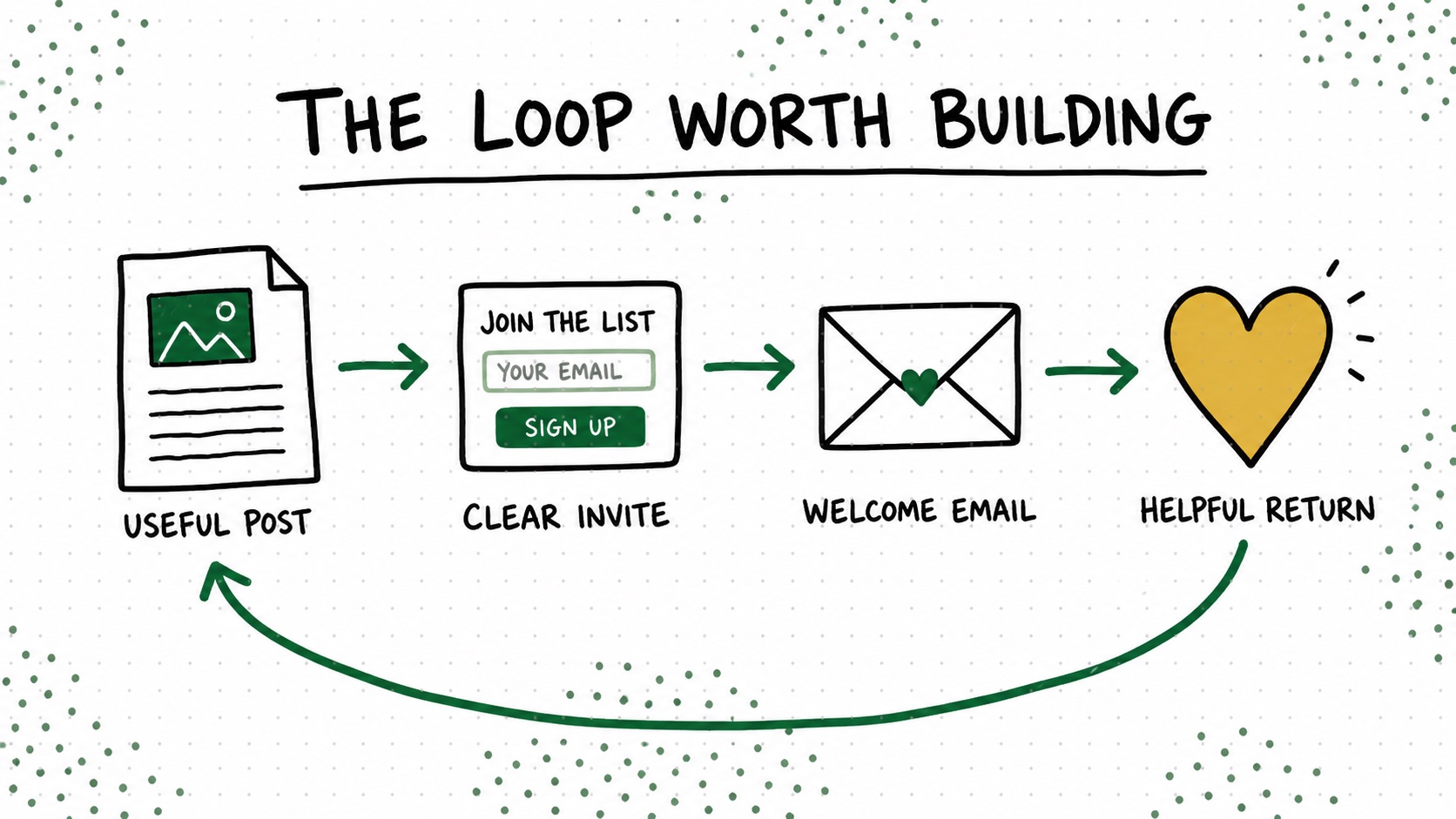
1. Publish one genuinely useful post
Pick a question you understand well enough to answer without hiding behind research.
If you are a food blogger, that might be the weeknight recipe you have made 40 times. If you teach freelance design, it might be the project brief you wish every client completed. If you write about gardening, it might be the reason three innocent tomato plants died on your watch.
You are not trying to cover the whole subject. You are trying to help one kind of reader make recognizable progress on one problem you actually understand.
This is where Simple Marketing for Smart People is particularly useful. Billy Broas and Tiago Forte argue that your core message sits upstream of channels and tactics. In plain English: get clear about what the reader needs to understand before worrying whether the carousel should have seven slides or nine.
In Simple Marketing for Smart People, marketing is treated as teaching rather than pressure. Before outlining the post, ask what the reader needs to understand—or stop misunderstanding—before the next step feels sensible. That answer is usually more useful than another afternoon studying headline formulas.
2. Give the reader a specific reason to subscribe
“Join my newsletter” describes an action. It does not explain the value.
Tell the reader what they will get:
- A weekly dinner plan using the recipes on the blog
- One practical client-acquisition lesson every Tuesday
- Seasonal planting reminders for a specific region
- A five-email walkthrough that helps a new blogger publish a first post
The promise should continue the work the article already started. A reader who came for tomato advice probably does not want your general thoughts on morning routines, cryptocurrency, and the emotional significance of airline points.
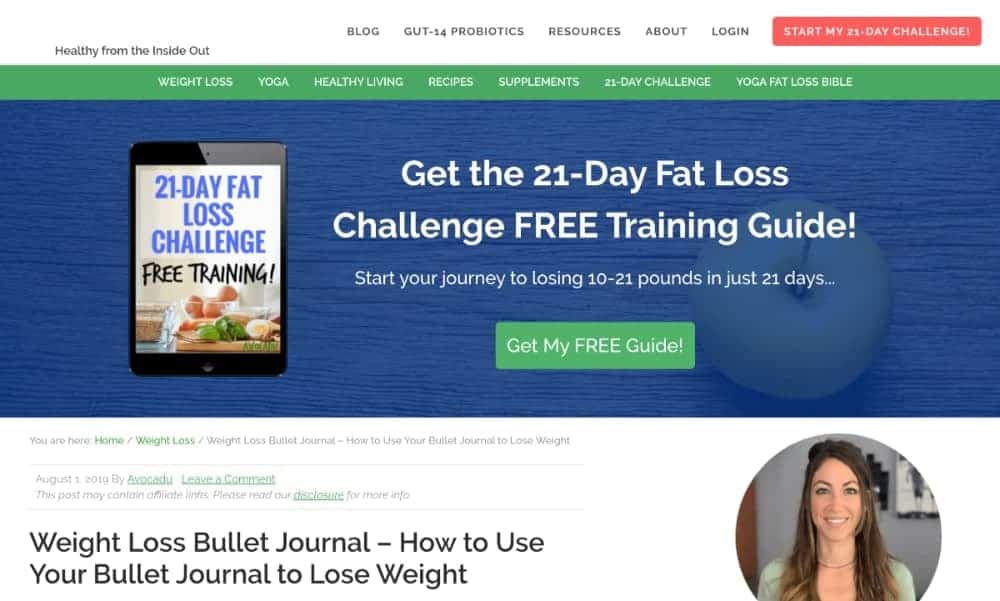
The connection should be obvious without a paragraph of sales copy. Here is a real example from one of our earlier health blogs. The banner was not subtle, fashionable, or destined for a design museum, but a reader looking for weight-loss help could understand the next step before finishing their first sip of coffee.
3. Write one welcome email
Start the welcome email by delivering what you promised. In the same note, tell the reader what you normally send and roughly how often it arrives; people should not have to reverse-engineer the arrangement from your next six subject lines. Before signing off, recommend the one article, episode, or tool that makes the most sense after the thing they just requested.
That final recommendation is easy to miss because the automation technically “works” without it. The file arrives, the tag fires, and everybody congratulates the funnel. Meanwhile the new subscriber is standing at a dead end.
In a Creator Science interview saved in our notes, Nathan Barry explained that creators should think about what a subscriber consumes next. If the download solved the first part of a problem, the welcome email can point to the article that solves the next part. That is how one helpful visit becomes a small, self-directed binge instead of ending at a receipt page.
Start with one honest email. Build a longer sequence after you learn what new subscribers ask, click, and reply to.
Engineering 19 automations for an audience of four is a thrilling way to avoid writing to those four people.
4. Send something useful on a schedule your life can support
Weekly is not morally superior to twice a month.
The useful schedule is the one you can sustain without resenting the people who signed up.
Oliver Burkeman’s work is helpful here because it starts with the fact most productivity advice tries to sneak past: your options are effectively infinite; your time and energy are not.
You cannot build a great blog, a daily newsletter, a YouTube channel, a podcast, three social accounts, a course, and a deeply fulfilling offline life by “wanting it more.” At some point, arithmetic becomes involved.
Choose a rhythm that leaves room for the rest of the work, and be honest about what that choice rules out. A thoughtful email every other week may mean you are not also publishing five short videos a day. That is not a failure of discipline. It is a decision about where your best effort belongs.
Burkeman discusses Dan Harris’s “daily-ish” approach: consistency without turning a missed day into a courtroom drama about your character. For a newsletter, that might mean weekly-ish or twice-a-month-ish. The point is a durable pattern, not a perfect streak.
Noah’s notes on Oliver Burkeman’s conversation with Modern Wisdom kept returning to finite time, the limits of control, and rules that should serve a life rather than take it over. Listen to the episode if your publishing plan currently assumes you are three people in a trench coat.
Do not let the algorithm choose your identity
James Clear has spent years publishing a compact weekly newsletter while social platforms rose, fell, changed owners, changed names, and developed exciting new ways to make everybody tired.
In his conversation with Tim Ferriss, Clear talks about capturing ideas, building durable habits, and not letting social-platform inconsistency dictate who you become. That last point matters for bloggers.
If the algorithm rewards outrage this month, you do not need to become angrier. If short video gets more reach, you do not need to rebuild your entire creative identity around pointing at captions.
Learn how each platform works. A good YouTube title is a real skill, and so is writing a LinkedIn post people can follow on a phone. Just do not let this month’s distribution preference decide what kind of person you have to become. Build the underlying practice around work you would still be proud to make after the current format loses its special treatment.
Start around 35:11 for social-platform inconsistency and 40:25 for the warning against letting an algorithm dictate your identity. The writing and book-launch discussion begins around 1:15:39.
That is what owning your audience is really for. It is not a retreat from the internet or a purity test about which tools count as truly “owned.” It is continuity: the ability to keep serving the same people while the tools around the relationship change.
An owned audience is also a feedback system
The obvious benefit of an email list is that you can send people links and offers. The quieter benefit is better judgment, because a direct relationship produces feedback that a follower count cannot.
- Replies show how readers describe the problem in their own words.
- Clicks reveal which ideas pull them forward.
- Questions expose where your explanation was incomplete.
- Sales show whether the problem matters enough for someone to pay for help.
We learned this the expensive way on an early health blog. We built a product based on what we assumed the audience wanted and made one sale.
One.
Not “one launch.” One sale.
The internet had not conspired against us. We had skipped the conversation and gone straight to production. An email list would not have guaranteed a winning product, but it would have given us somewhere to ask better questions before building the wrong thing so confidently.
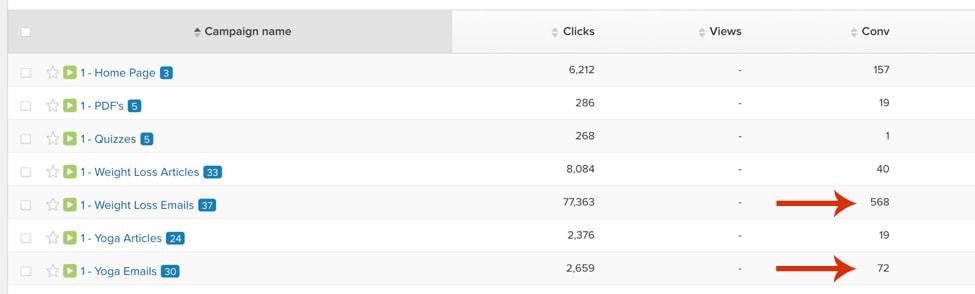
The screenshot below comes from our old tracking setup. In this archived snapshot, the email campaigns recorded more clicks and conversions than several passive placements around the site. It is not a universal benchmark, and the tools are old enough to have lower-back pain. It records what happened in these campaigns; it does not isolate email as the cause or predict what another business will see.
That changes the role of the audience. It stops being a scoreboard you visit for reassurance and becomes part of the research that improves the blog.
You still need discovery channels
“Own your audience” becomes bad advice when people translate it into “ignore every platform you do not own.”
Please do not build a beautiful website, turn off all the lights, and wait for the public to sense its presence.
Owned assets still need traffic. Search can put an old article in front of somebody at the exact moment they need it. A Pinterest pin or YouTube video may create the first flicker of recognition, while a podcast appearance or useful post in a community borrows trust from a place where people already gather. None of those channels is the enemy. The risk appears when one of them can interrupt nearly every reader relationship at once.
The healthier sequence is:
- Get discovered where attention already exists.
- Help immediately with one strong piece of work.
- Invite permission to continue the relationship.
- Recommend what comes next so the reader is not left at a dead end.
- Learn from the response and make the next piece better.
Jay Clouse makes a related argument in “An Alternative to the Content Treadmill”: a creator can invest in fewer, higher-effort projects that become proof of work instead of feeding an endless short-form machine.
That is especially useful advice if “be everywhere” has turned your content calendar into a hostage note.
You do not need every channel. Start with one discovery channel that fits your strengths and gives the right people a believable reason to visit the blog. Once that path produces readers, make sure the best of them have a clear way to continue by email. A second discovery channel can wait until the first system is doing more than generating another dashboard to check.
The common ways bloggers stay rented
Waiting for “enough traffic” to start a list
The best time to learn how to welcome subscribers is when the list is small enough to make mistakes quietly.
Ten subscribers are enough to test whether your promise makes sense and send a useful note that asks for a reply. They are also enough to discover that your carefully designed email looks like a ransom note on a phone, which is valuable information to receive before 10,000 people see it.
Start small on purpose.
Collecting addresses but never sending anything
A list is not valuable because the rows exist.
The value lives in the relationship. If someone signs up and hears nothing for nine months, you do not have a warm audience waiting patiently in a digital cupboard. You have a list of people trying to remember who you are.
Send the welcome email while the signup is still fresh in the reader’s mind. After that, keep the first promise on a schedule you can manage and let the longer sequence grow out of real questions instead of guesses.
Building five channels with no path between them
Your podcast, Instagram account, YouTube channel, blog, and newsletter should not behave like five coworkers who have never met.
Pick one primary discovery channel and make the route from that channel to your site obvious. Then check whether the site gives the right visitors a specific reason to subscribe. Another account can wait until this route works; collecting inactive profiles is not the same as reducing dependence.
Confusing software with strategy
Changing email tools can improve a workflow. It will not make your emails worth reading.
Choose a service that lets you export subscribers, build forms, and send the kind of emails you need. We use and recommend Kit for bloggers, but the principle matters more than the logo in your dashboard.
The tool carries addresses and sends messages, but the relationship is earned by what arrives. A migration will not rescue vague emails, and a prettier form cannot fix a signup promise nobody wants.
A better scoreboard for audience ownership
Follower growth is easy to see, which is why it steals so much attention.
Ownership needs a different scoreboard.
| Can readers find you directly? | Do the right visitors choose to stay? | Do subscribers still want the relationship? | Does email bring people back? | Could you move the system? | |
|---|---|---|---|---|---|
| What to watch | Direct traffic, branded searches, repeat visits | Signup rate on relevant posts | Opens, clicks, replies, unsubscribes, complaints | Visits from email to articles and offers | Recent exports and site backups |
| What it may tell you | Your name and work are becoming memorable | The invitation continues the reader’s journey | Your promise and emails remain relevant | Your return path is working | Your “owned” assets are actually portable |
Watch these long enough to spot a broken handoff—not often enough to turn the dashboard into a slot machine.
Check these often enough to spot a broken handoff, not so often that the dashboard becomes a slot machine.
The goal is not perfect independence. It is a business with more than one dependable way to reach the people it serves, plus enough portability to change tools without losing the relationship underneath them.
Frequently Asked Questions
Can you really own an audience?
You cannot own people or their attention. “Owning your audience” means controlling the assets that support a direct, permission-based relationship: your domain, website content, and an exportable email list. Subscribers can leave at any time, as they should be able to.
Is an email list more important than social media?
They do different jobs. Social media is often better for discovery and conversation. Email gives you a direct, portable way to continue the relationship. Most bloggers benefit from using one discovery channel to grow a list instead of treating the two as competitors.
Do I need a website before starting an email list?
No. You can start with a landing page from an email service. A website becomes valuable because it gives your articles, proof, and offers a permanent home under your own domain. If you plan to build a blogging business, the blog and list should eventually work together.
What should I send my email list?
Send the next useful thing related to the reason people subscribed: a new article, a practical lesson, a case study, a relevant recommendation, or an offer. Relevance and a sustainable rhythm matter more than complicated formatting.
Build the door before you need the exit
Most people decide they need an owned audience right after a channel stops working.
That is like buying a fire extinguisher while the curtains are already making an interesting noise.
You do not need an elaborate funnel to build that exit before you need it. Start with the most useful post already on your site and add an invitation that continues the subject instead of interrupting it. Write the welcome email while you still remember what that reader was trying to solve, then point them toward the strongest next resource you have.
Keep posting on social media and learning search if those channels suit the work. Let them introduce you to people you could not have reached alone. Just make sure the effort leaves behind more than a temporary spike on somebody else’s graph.
Your next move: add one specific email invitation to the most useful post on your blog, then write the welcome email that reader should receive.
